$60.12
$115.43
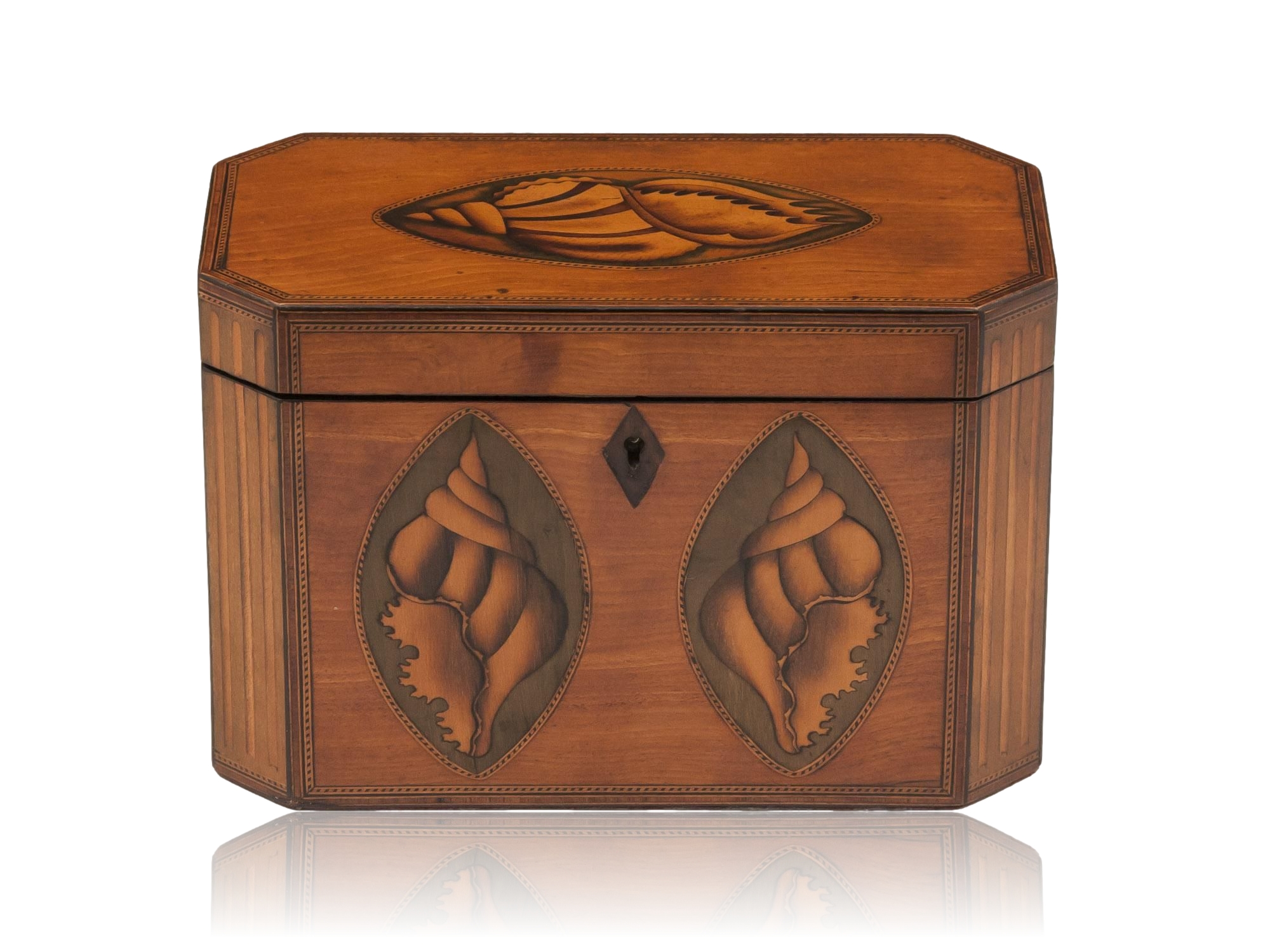
Description This Tea Caddy in Burr Yew Wood with Conch Shell Inlay dates to the late Georgian period during the reign of George III, circa 1790. The tea caddy is of rectangular form with fluted green canted corners. The front and lid are centred with two oval conch shell inlays outlined with alternating rope shaped stringing, creating a distinctive decorative feature across the exterior. The front and lid are framed with tulipwood crossbanding and fine boxwood stringing, centred with a kite shaped bone escutcheon. A small historic repair is present around the escutcheon. Opening the tea caddy reveals a fitted interior edged in boxwood and housing twin internal compartments with burr yew wood veneered lids. Each lid is surmounted by a turned bone handle. This Georgian Burr Yew Tea Caddy displays particularly attractive burr yew wood figuring throughout and retains a pleasing period patination. View the full Tea Caddy Collection. Mark Goodger Antiques has handled Georgian, Regency and Victorian tea caddies for decades, covering examples in tortoiseshell, pressed horn, burr woods, fruitwood, japanned surfaces, Tunbridge ware and silver. Our stock regularly includes sarcophagus forms, bombe shapes, novelty fruit caddies and rare interior configurations. Through continued study of construction methods, veneer combinations, period inlay techniques and interior composition, we place particular emphasis on authenticity and correct attribution. Understanding which materials were used together, how interiors were finished, and how hinges and mounts were constructed is essential when assessing genuine eighteenth and nineteenth century tea caddies. This depth of specialism allows collectors to purchase with confidence, whether acquiring a first example or adding to an established collection. What is Burr Yew Wood? Burr Yew wood originates from Asia, Europe and North Africa. It is yellow-brown to orange-brown and usually conforms to a fine uniform pattern. Yew wood usually has black pips scattered throughout so clean veneers fetch a high price and are reserved for finer items. A few trees will produce a burr which offers a distinct decorative finish. For further information see our Woods Encyclopaedia on Burr Yew Wood. What is Boxwood? Boxwood known as “Buxus sempervirens” can be found in Europe, Northwest Africa and Southwest Asia. It is a light cream that turns darker to brown when exposed to light. The trees are very small meaning it is suited to smaller projects like edging or inlay instead of veneers. For further information see our Woods Encyclopaedia on Boxwood. What is Tulipwood? Tulipwood is a rare and highly decorative hardwood from Brazil belonging to the rosewood family (Dalbergia). It is recognised for its distinctive colouring, combining streaks of yellow, pink, orange and red which create a striking variegated appearance. Because the trees produce only small sections of usable timber, tulipwood has historically been used mainly for veneers, crossbanding and decorative inlay rather than large furniture pieces. During the eighteenth and nineteenth centuries it became popular in European cabinetmaking where its vivid colouring provided contrast within fine marquetry and small decorative objects. For further information see our Woods Encyclopaedia on Tulipwood. Conch a name of a number of different medium-to-large-sized sea snails. Conch shells typically have a high spire and a noticeable point on both ends. What is the Georgian Period? The Georgian period spans from 1714 to 1830 and covers the reigns of George I, George II, George III and George IV. It was a time of expanding trade, growing wealth and increased demand for domestic luxury goods within Britain. In furniture and decorative objects, Georgian design is associated with balance, proportion and restrained ornament. Influences ranged from Palladian architecture in the early eighteenth century to the neoclassical revival later in the period. Cabinet makers developed increasingly refined veneering techniques, fine inlay work and precise mouldings, while tea wares and storage boxes reflected the social importance of tea drinking within polite society. Tea caddies from the Georgian period were both practical and valuable household objects, designed to store costly imported teas securely while also displaying the owner’s taste and status. Why Buy from Mark Goodger Antiques? With over thirty five years of specialist experience, Mark Goodger Antiques is recognised internationally as a leading authority in antique boxes and related works of art. Every item offered has been personally selected by Mark, whose knowledge and judgement are trusted by collectors, institutions, museums, interior designers, and fellow dealers worldwide. Every purchase is supplied with a full supporting package for clarity and reassurance. This includes a Certificate of Authenticity, a detailed condition and care guide specific to your item, our most recent catalogue, and a separate invoice suitable for insurance and valuation purposes. Each piece is carefully examined prior to sale to ensure accuracy of description and quality. Your purchase is fully insured during transit and protected by our straightforward money back guarantee, allowing you to buy with complete confidence. We pride ourselves on transparency, expertise, and long term relationships with our clients, many of whom return to us repeatedly over decades. When you buy from Mark Goodger Antiques, you are purchasing from a specialist family business built on knowledge, trust, and an unrivalled focus on antique boxes.
Tea Caddies